THE NO-GO ZONE
Aim off the wind
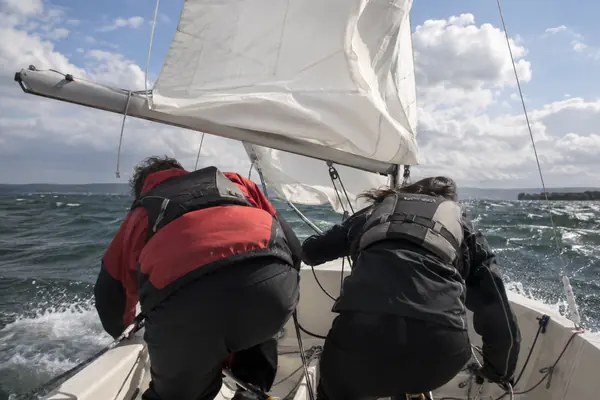
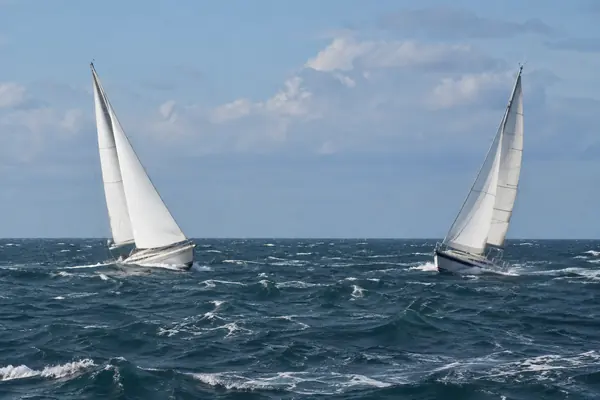
A sail stops working in a zone of roughly 45° either side of the true wind. Sail as close as you can to its edge and you are close-hauled.
See the numbers doodletack
HOW SAILING WORKS
No sail can push a boat straight upwind.
Who gives way?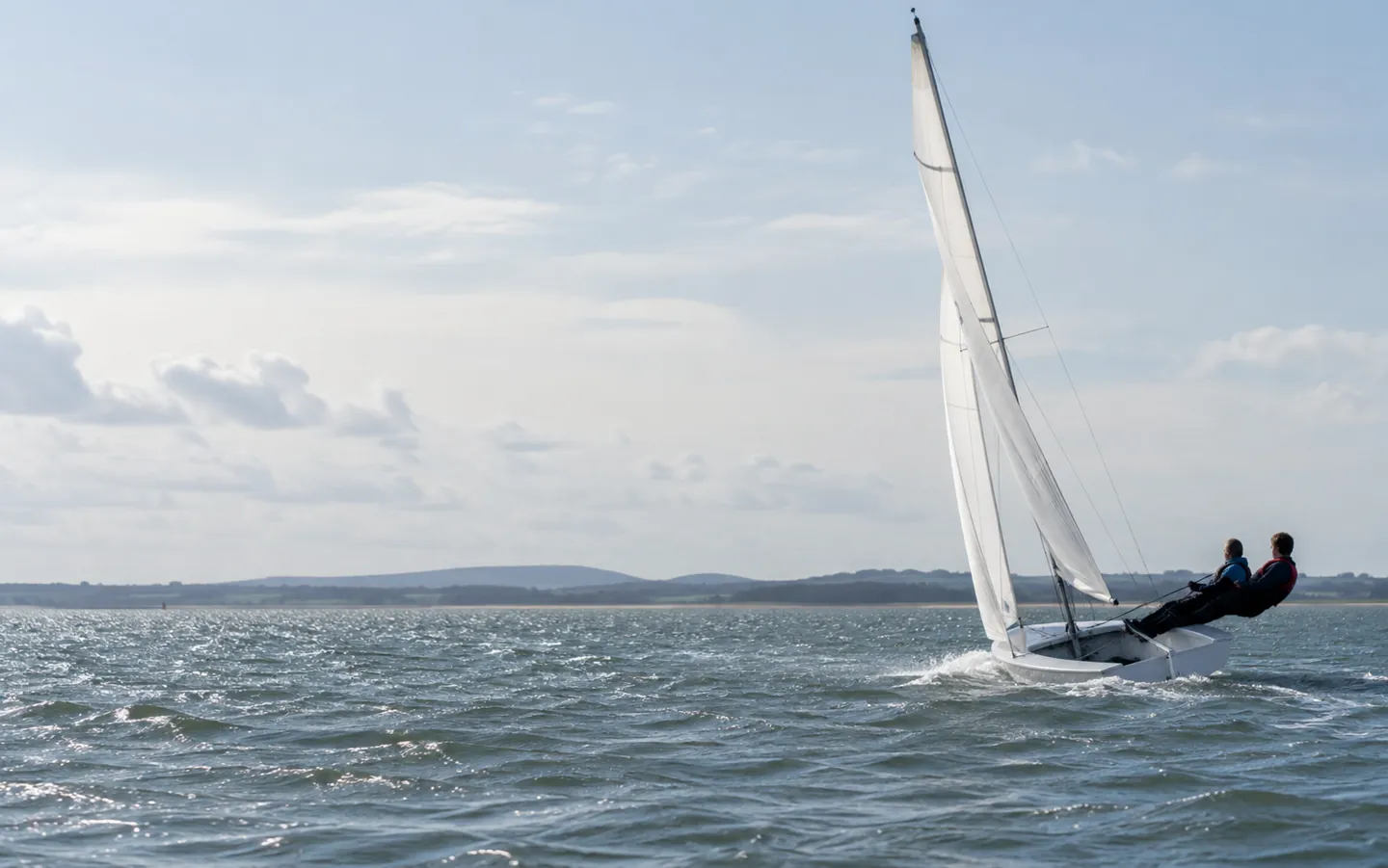
ABOUT 45°off the wind
So sailors aim off at an angle, then turn the bow through the wind and aim off the other way. That turn is a tack, and a string of them is how a boat beats to windward.
At a glance
≈ 45°
Closest typical angle to the true wind
A UNSW physics guide gives about 45° to the true wind as typical, with high-performance boats able to go closer. Reference sources put the no-go zone at between 30 and 50 degrees, depending on the boat.
THE NO-GO ZONE · PHYSICS
4× more likely
Chance of surviving in the sea
The RNLI cites research by Professor Mike Tipton (2012) finding that someone in the sea wearing a lifejacket is four times more likely to survive.
LIFEJACKETS · RNLI
TWO NUMBERS WORTH KNOWING
How close a boat can point to the wind,
and why the lifejacket matters.
The RNLI says its lifeboats launched to sailing vessels 724 times in 2024, and that mechanical failure is the single biggest cause of call-outs to sailing vessels and motorboats.
A QUICK CROSSING CHECK
Pick a situation to see what the international collision rules say for two sailing vessels at risk of collision. The bar shows how much the rule asks of you.
Based on Rule 12 of the International Regulations for Preventing Collisions at Sea. General information only; take a training course before you sail.
THE SHORT ANSWER
A sail works like a wing, but only at an angle.
Tacking is how sailors get around that.
THE NO-GO ZONE
A sail stops working in a zone of roughly 45° either side of the true wind. Sail as close as you can to its edge and you are close-hauled.
See the numbersTHE TURN
To tack, the boat turns its bow toward and through the wind, so the wind moves from one side to the other. Gybing is the same idea with the stern.
How a tack goesRIGHT OF WAY
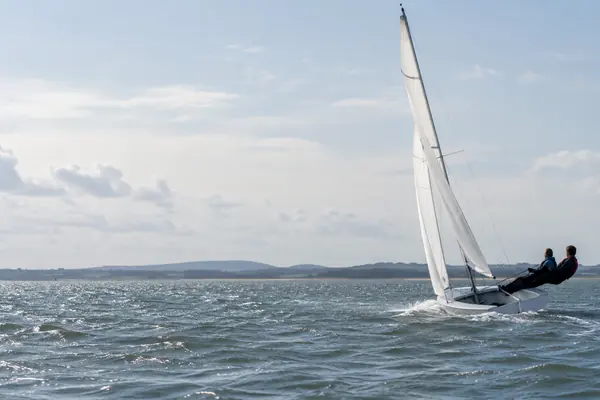
When two sailing vessels meet with the wind on different sides, the collision rules say the one with the wind on its port side keeps clear.
Check a crossing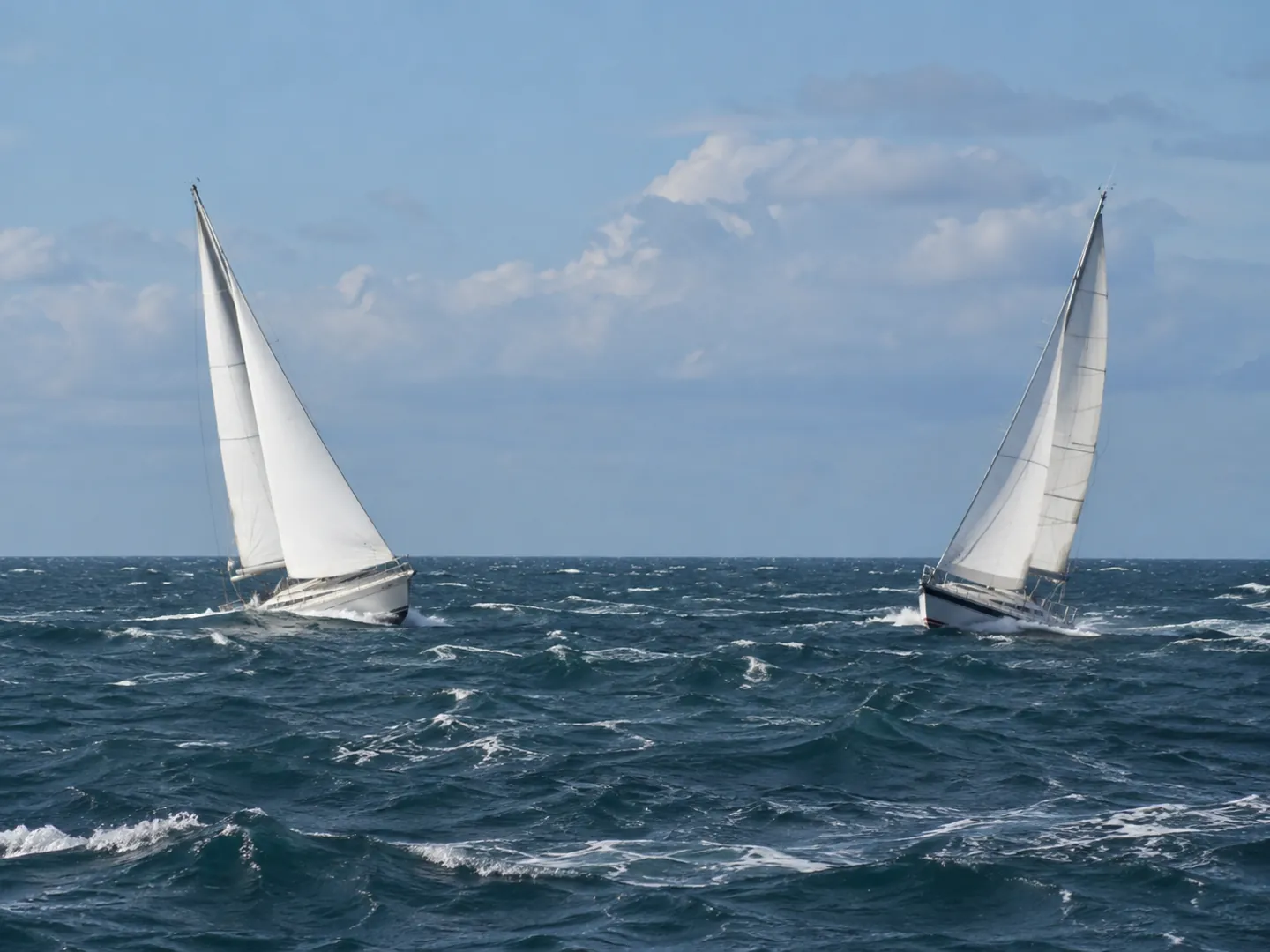
THE TACK, STEP BY STEP
On a small boat with a jib, the moves follow the wind as it swaps sides. Learn them with an instructor first; this is how the sequence fits together.
Point as close to the wind as the boat will go, at the edge of the no-go zone, with the sails trimmed in.
Steer so the bow swings toward the wind, briefly points dead upwind, and carries on through to the other side.
Release the old leeward jib sheet as the boat heads through the wind, then pull in the other sheet as the new leeward sheet.
The wind now comes over the other side. Trim the sails and sail close-hauled again until it is time for the next tack.
WHY IT WORKS
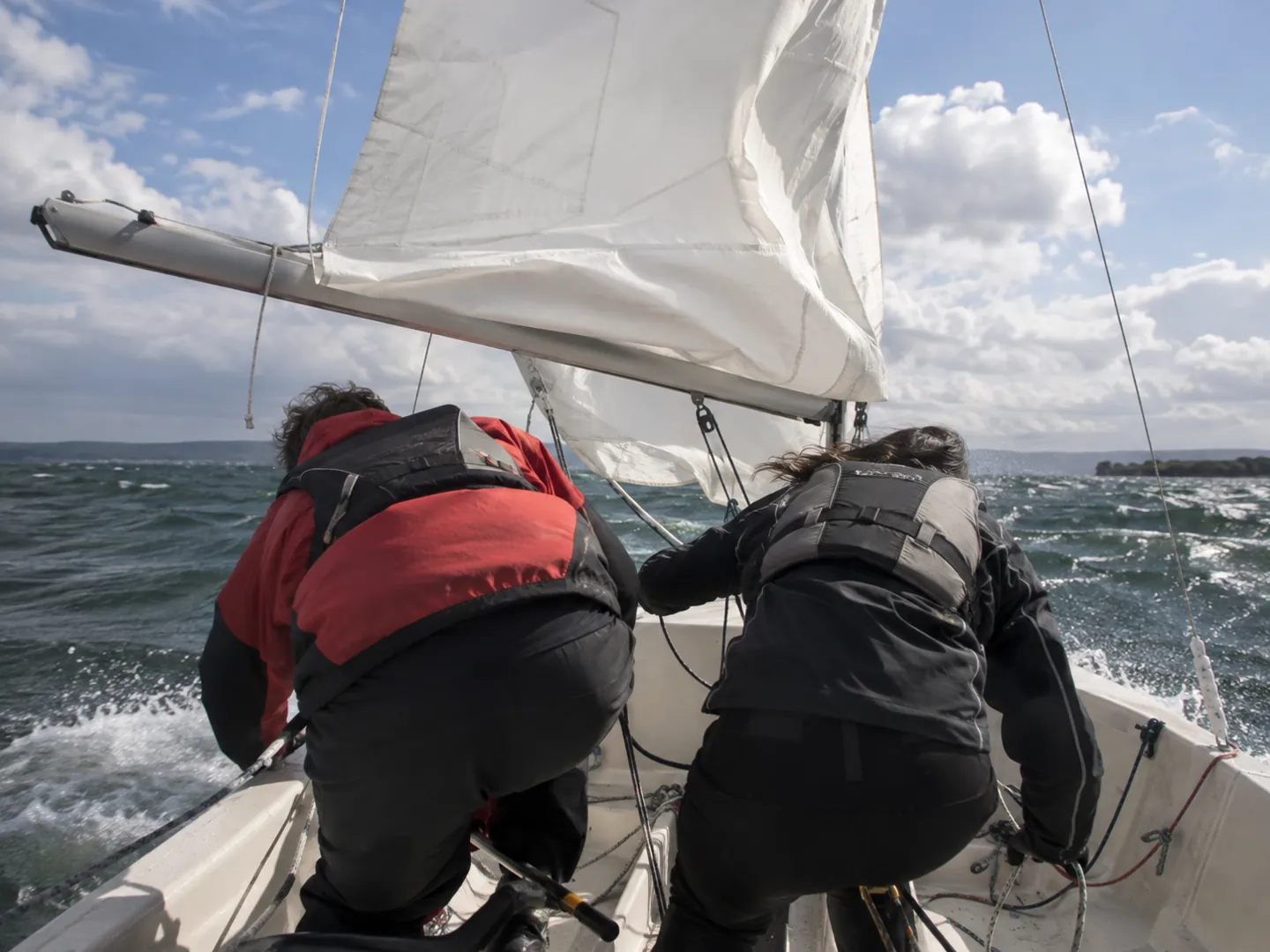
A sail turns the wind as it flows past, and the air pushes back on the sail. Close to the wind, most of that push is sideways, with a smaller part pointing forward.
The keel stops the boat being shoved sideways: it pushes water aside, and the water pushes back. What is left is the forward part, which drives the boat along until water drag balances it.
Questions
A sail only produces useful force when the air flows past it at an angle. In a zone of roughly 45° either side of the true wind it cannot do that, so boats zigzag upwind instead.
Tacking turns the bow through the wind, so the wind moves from one side of the boat to the other across the front. Gybing does the same downwind, with the stern passing through the wind.
They describe which side the wind is coming from. Rule 12 of the collision rules talks about a vessel with the wind on its port side; sailors call that port tack, and wind over the starboard side starboard tack.
Carefully. Their masts are better supported from behind than ahead, so tacking was risky in strong winds. Instead they could wear: turn away from the wind and round about 240° onto the next tack.
The RNLI advises taking a training course, checking the weather and tide first, always wearing a lifejacket on deck and telling someone where you are going and when you expect to be back.
Sources
ABOUT THIS NAME
doodletack.com is part of the DoodleSale portfolio. It isn't in an auction right now, but you can ask about leasing it.